Thursday, July 6, 2023

Pecha Kucha

     While I always knew I wanted to become a teacher; my teaching story did not begin until I got into my first classroom in 2019. I was fresh out of college and worried that I would not get my own classroom. That was the dream. The dream was to have an organized classroom with decorations, posters all around, flexible seating, and whatever else I saw on Teachergram (teacher Instagram). I saw teachers who looked happy in cute outfits and had colorful classrooms and that became what I wanted. That was how my media use shaped my teacher’s ideology. It gave me a false perception of what was ahead of me. My reality became a middle school classroom in Providence, Rhode Island right next door to the boy’s bathroom with a broken teacher desk, mismatched desks, glue stuck to the wall from posters torn off the walls, a SMARTboard with no touchscreen capabilities and a dividing wall that almost nothing would stick to. As I stood in front of 27 thirteen and fourteen year olds I felt unprepared for what was ahead of me. That school year ended virtually as the world shut down due to the pandemic.

In the summer of 2020, I enrolled in graduate school at Rhode Island College and I felt a transformation begin. At first, when I enrolled it was because I had to, but the work I would put in during a single year changed how I saw myself as an educator and as someone who worked with youth. I dove into how and why middle schools developed in the United States and the important role they play in those pivotal adolescent years. Over that year I worked on my identity, finding my voice and the power it has and I explored how I could create a safe space for my students to cultivate theirs.

    In this teaching position I felt powerless. I worked in a district that was cited as failing children and was being taken over by the state. I worked in a school where the relationships between students, teachers and administration were almost non-existent. I saw the consequences for those who spoke up or questioned the status quo. I listened and did what I was supposed to do, but I was unhappy. I thought I had no power to make what I thought were the best decisions for my students. I taught in the shadows of others and could not find my own path. Even though this was a negative experience, I believe it taught me a lot and helped shape my current beliefs.

This past year I changed schools and began working at a charter school. Instantly, I knew this community was different. It was welcoming and they honored my experience and asked for my opinion. This gave me the confidence to become involved in the school community in different ways. A colleague and I noticed that students had a negative picture of the school. Just as Michael Wesch (2016) asked his students what it was like to be a student, I would often ask my students this during advisory or during downtime in class. They responded with “boring” and commented that there are not many fun events for them to go to. They even recalled how only 30-40 students attended the dance the previous year. When asked about school spirit they said it did not exist. I do not believe that stems from the adults not being interested in the “fun” side of school. I believe it comes from the students not being asked. Both my colleague and I attended middle-class high schools with a lot of school pride with clubs, sports teams, pep rallies, and dances. We discussed how some of our favorite memories from that time were from those parts of the school year. We decided that we wanted to create similar experiences for our students so we became student council co-advisors.

As advisors, we had a successful year. Together we planned council meetings, planned dances, pep rallies, fundraisers, and our end of the year field day, but we also spent hours a week after school discussing, brainstorming, and meeting with our principal. At the end of this year, we reflected and decided that we need to shift the responsibility onto the students more because the amount of work we were putting into making events happen is unsustainable going forward. Our vision is that our council members truly become representatives of their peers and that a positive school culture stems from them. To do this we need to empower our students to be leaders. I want students to become agents by allowing them to share their voices and the voices of the students they represent so that they can enact the change they want to see. This is a large goal that will continue to develop throughout the year. Therefore, the first step I have taken is creating a Google Form that will be made available for all students to fill out at any point in the year. This will allow for the greatest number of students to be heard. The focus of the form is on school culture and community. Through the form students from any grade will be able to share problems and ideas for community events. From there the council can read the forms, develop the ideas and communicate with the principal directly. 

    Prensky (2001) would say I am from the digital native generation. I grew up with the internet and social media and had access to computers at home and at school. According to Scott Noon’s (2012) four-tier model, I consider myself a techno-traditionalist with a few moments as a techno-constructivist. This Google Form takes the traditionalist version of a suggestion box and digitizes it. Wesh discussed how the “new” (circa 2011) media landscape makes it easy to connect, organize, share, collect, collaborate and publish. The Google Form is a digital tool that will do all of that. It connects students because it allows their voices to be heard, it collects and organizes the results into a spreadsheet, it allows student council members to act on the results by collaborating with one another and is information that they can share with the principal. This digital tool also meets students where they are because students use Google tools on a daily basis. I will also utilize Google Classroom to give students access to this form all year by asking each advisor to post it in their Google Classroom. The results will turn into a living document that as a council we can revisit and use to drive the decisions we make because the ideas are representative of the school community. This form could even be completed by teachers.

    At the start of the year, I was not sure I wanted to be a part of student council, but something pushed me towards it and after taking this course I believe what pushed me into this new role was my belief in the power of education. Looking back I knew what student council should do and I knew what events I wanted to provide students based on my high school experience. I also had an idea of how I could make those ideas happen, but as Simon Sinek (2010) said, “People don't buy what you do. They buy why you do it." I now see that “what” I did was make small progress towards a larger goal, but by connecting my “why” I can strengthen my student’s voices and our school community. I believe education empowers people, fosters independence, and has the potential to make the future better for society. I also believe students learn better when they play an active role in their learning and in their space. This connects to my vision for the future of student council because I want the students to play a more active role in building a positive school culture. By creating a plan to guide students in developing the skills necessary to develop into leaders I believe that I will feel connected to my beliefs and values as an educator. This will empower my students to recognize the power their voices have as individuals and as a community. I recognize that this is a large plan that will take the entire year to develop, but I also believe in the change that can come from young people. This work is important to me. This is why I plan to use my school’s WIN or Whatever I Need Block to help students develop these skills. This block of time will allow space for collaboration, mentoring and risk-taking that will give them confidence and empower them to use their voices to make positive changes.

Pecha Kucha


Monday, July 3, 2023

Connected, but alone?

Sherry Turkle in 2012 speaks about the idea of being alone, together. In her TED Talk she speaks of how technology gives us the control we desire. We get to control who we present to others. We get to control how much or how little of us people know. I can connect to this because I scroll a lot but I don't post often to show others what I'm up to. Turkle said that technology offers us three fantasies.

  1. We can put our attention wherever we want it to be
  2. We will always be heard
  3. We will never have to be alone
While I was growing up technology and social media was present in my life. I got a phone when I entered middle school. I could text although each text cost .10 so I was limited. I could also take pictures which was exciting. I did not get a smartphone until I was a senior in high school. I was the last of my friends to get one. When I was with my friends I always felt on the outside because I couldn't scroll or browse the internet and I didn't know of the latest trends. Now, I do have the capability of scrolling and seeing the trends myself, and I'm actually glad I wasn't able to before because I see how much time I spend on my phone. I purposely don't turn on screen time notifications because I'm scared of that number. 

Fast forward to 2020. All of a sudden we are forced to stay away, locked up in our homes. But that did not stop us from socializing with the help of technology. We could Zoom, tweet, post on Facebook, Instagram, Snapchat or just through texts, calls, and FaceTime. People were forced to work from home and even when restrictions were lifted many of them have chosen to stay at home. I think many people prefer to be as Turkle puts it in her article, together alone. For a brief moment, we were happy that we could see our friends face to face but that moment ended quickly and people retreated back to their home offices and hopped onto the next Zoom meeting.

For the sake of our future, I hope that people can learn how to exist while not glued to a device. So many headlines during the pandemic highlighted the effects on mental health and on children. We see the studies, but will we change our behavior?

Turkle asks, "Will this end as it began?" My thoughts are that it will be a long and slow process to unlearn the way we lived during the pandemic and we will mostly continue to exist similarly to how we have been. Yes, we can see each other face to face and that's great but many people continue to be apart or are staying connected to the people they could be close to during the pandemic. I was 22 when the world shut down so I didn't have a long time to see how the real world operated. Time will tell how society chooses to interact with one another. 

Sunday, July 2, 2023

Using Art to Engage Students in Social Justice Work

Stenciling Dissent: Political graffiti engages students in the history of protest for social justice

By: Andrew Reed

The main idea of this chapter is that artwork has the power to reach people and can be used to make relevant connections to students. Reed describes how he connected his history unit on the power of protest to graffiti artwork. For the project students researched an individual, group, or event that was important to the history of protest in the United States. The product of their research was an essay, a piece of stencil art, and a paragraph capturing the subject's importance to protest movements. Reed had the students create their own stencils and they all painted them onto a large canvas that was hung up in the hallway. I thought that it was a great idea to have them all on the same canvas to show how connected all of their work was. It showed the work as a collective piece rather than a competition of who was the better artist. 

What made this project relevant and meaningful was its social justice lens and connection to his students. Reed works with a similar population many of us in this class work with. He recognized that graffiti is relevant to his students and is within their communities. He also showed how protesting has been a way for minority populations to use their voice when their voice wasn't reflected in the vote. I think this is extremely relevant today. While some thought this was "un-American" he did receive a lot of positive feedback as people stopped and read the canvas as they walked in the halls.

I picked this article because I teach history and my school has an initiative to integrate art into other content areas. This could be a social justice sneak as Brittany shared with us last week. There is still rigor involved because students have to research and write but social justice is at the core because the topics are connected to sharing the voices of those who are sometimes shut out. He also purposely left out some of the more well-known figures to highlight different voices. Overall, I could see myself including a project similar to this in my classroom.


Saturday, July 1, 2023

Tech Tools: Classroomscreen

Classroomscreen.com 


Learn why you should use this tool! (video)


Build a School in the Cloud

"How is present-day schooling going to prepare them for that work?" This is one question that Sugata Mitra poses. To answer this Mitra basically performs an experiment where he puts a computer in a wall of a neighborhood with children who wouldn't normally have access to one and he does this just to see what happens. What I saw in the footage of children using computers is that children are inherently curious. These children had no idea how to use the computer and they even said they had to teach themselves English to use it. These obstacles didn't stop them from trying to figure the machine out.

At one point Mitra says that we need to let learning happen rather than making learning happen. This stuck with me and made me think about the learning process. As teachers, we focus on the content, process, and product and we emphasize the product because it gets the grade. For learning, I think we have to change that emphasis and put it on the process because this is the space where true learning happens. This is the space where students ask questions, investigate, and experiment.

With technology at their fingertips, I don't need to be the center of the classroom. I don't need to be the source of all knowledge. That would actually do a disservice to my students. Once students know how to use their resources they will be able to figure it out and most likely they will figure it out in conjunction with one another because when we don't get something we naturally ask someone else. Collaboration hasn't been a huge part of my classroom in the past few years partly due to the pandemic but if I work best by working with others then why don't I allow my students to work together? If I believe that school should be empowering then I need to expand my idea of teaching and learning. Just as we have had time in class to explore, play with technology and work in groups I want to add more time for this school year.

This video is connected to many of the discussions we have had this past week. The speaker, Brandi Kubat-Snow, even brings up Prensky's digital natives/immigrants. Not that I agree entirely with that narrative, but she also speaks to the potential of incorporating technology to transform learning and transform the role of teachers and students in 21st-century classrooms.


Thursday, June 29, 2023

Podcasts In the Classroom


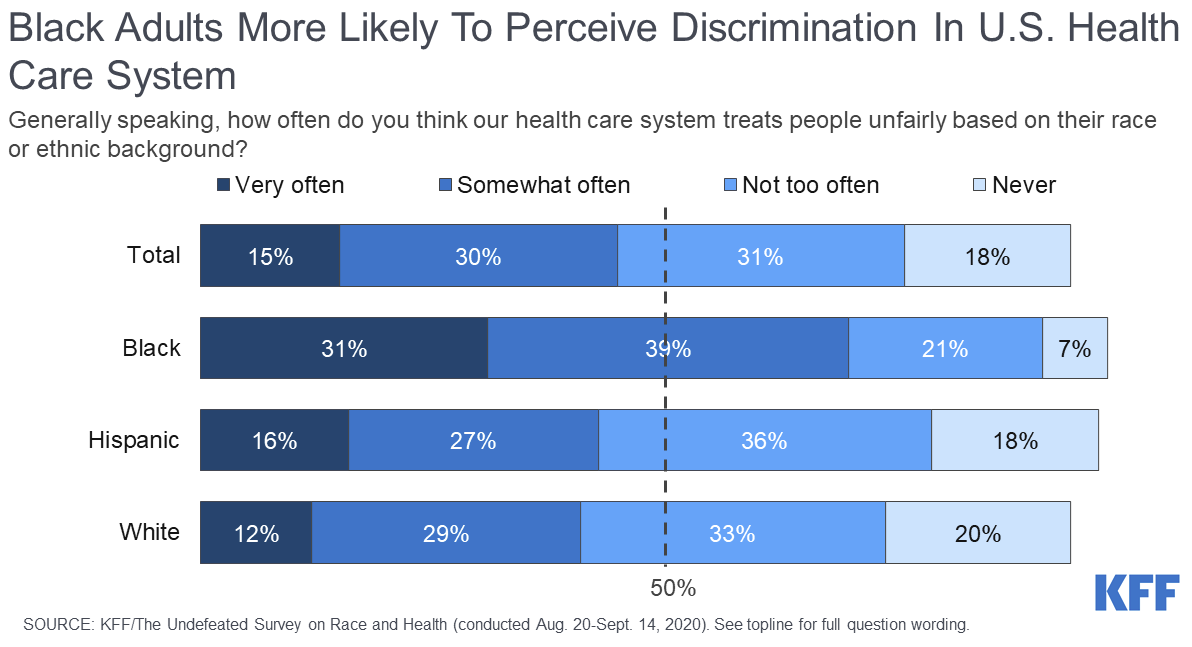
This podcast opens with a narration by a woman named Nikole Hannah-Jones. She begins by introducing the speaker's family and Nikole focuses on her special relationship with her Uncle Ed. In a heartbreaking end, her uncle dies because of the lack of access to equitable health care. That was current, but then the podcast goes back in time to 1866, the beginning of Reconstruction, following the Civil War. The time period is typically viewed as a failure due to the blatant systemic racism of Jim Crow Laws and the KKK. Then the narrators jump ahead in time again to the 1940s, then the 60s and 80s. 

image


The narrators do a great job of telling this story by seamlessly weaving in historical events and the social, economic, and political conditions for Black Americans across time. Skipping through the timeline is actually very powerful. Normally history is taught chronologically and you go year to year and that makes it harder to really see the change (or lack of change) over time. By skipping ahead the message is clear, there hasn't been much progress when it comes to healthcare. In the preamble of the U.S. Consitution, it says that the government will "promote the general welfare" but through this podcast, it is clear that when it comes to all types of welfare the government isn't protecting it for all. I enjoyed the layer that this podcast had and how it included the voices of the people it told the story of in time and place.

Podcasts as a learning tool for students is actually a conversation that my department began having at the end of this year. We even thought of using podcasts to replace our summer reading. We didn't end up creating a summer reading assignment but we did throw around the idea of using it in our first unit around a common theme we will explore. I think podcasts could be a great way to engage students, although I'm not entirely sure how I could structure it with my middle school students. The structure of it, how it's told like a story and makes connections through real stories is engaging. When the podcast was over I thought about how it could fit into my high school classes and I immediately thought of the themes of social studies standards and how so many are present in this podcast, and I thought about the discussions that could come from it. For example, in this podcast the narrator says, "Health care is a human right, and that any program that expands access to health care is the duty of a free and democratic society." This could become a discussion around what is a human right, or what is the responsibility of the government to protect citizens? I think a podcast could be more than a supplemental tool. I think it could start some deep conversations that are relevant, and meaningful to my students.

Tuesday, June 27, 2023

Disney

 I am definitely a Disney kid, and even today I love Disney. I grew up watching the movies and playing Disney trivia games. My family was not able to take trips to Disney because it would be costly. I have been to Disney two times, and since my last time going there, I have wanted to go back. The size, scope, and attention to detail of their parks have always amazed me. Even as an adult, I enjoy Disney. Like one of the students reflected on page 178, it is hard to look back and look within to see how certain stereotypes make up think or not think in certain ways. Walt Disney is all about imagination, even calling their creative team "Imagineers." But how much imagination do their animations leave room for? or Does Disney create the picture for us?

Christensen's chapter made me think of Harro's Cycle of Socialization (2004) that I read in the MLED program. The Cycle starts with the fact that we are born into a world where these systems and beliefs already exist. The first socialization takes place through our interactions with those who raise us (close friends and family). Then institutions and culture socialize us and reinforce these beliefs until we are faced with a choice; to stick to the status quo or to question it. Christensen is questioning it while some students, such as Justine were a bit more bothered by it. She was doing the critical work but it was uncomfortable (p. 177-178).

Christensen challenges my views of Disney. It is not a challenge that makes me angry about how I grew up or the fact that I still love Disney movies and theme parks but it brings awareness that I think I do need to have. I can love something, but still critique it. Of course, there are some major issues that do not align with who I am or what I believe but I am not angry that Christensen is pointing these issues out. Will I stop watching Disney+...no, but I can use my critical lens to start more conversations about the critical questions that should be asked of the company.


Monday, June 26, 2023

"Digital Native" / "Digital Immigrant"

While Marc Prensky uses age to separate "digital natives" and "digital immigrants", Danah Boyd challenges this simple grouping and discusses the overall need for proficiency in media literacy. In chapter 7, Boyd discusses Prensky's work and one of the major beliefs seems to be that younger generations think about and understand information differently compared to older generations (p.179). While I agree with this I do not agree with Prensky's assumption that technology usage is natural to them. On page 177 Boyd writes, "Teens may make their own media or share content online, but this does not mean that they inherently have the knowledge or perspective to critically examine what they consume...teens will not become critical contributors to this ecosystem simply because they were born in an age when these technologies were pervasive." This stood out to me because based on peer-to-peer conversations I hear in the halls it is easy to see that they are consuming information on Instagram, TikTok and/or YouTube and that single source or that single creator shapes what they know about the topic. It is more important than ever to teach students the skills to take the extra step and look at the source/author or simply read multiple articles on the subject to get a larger picture of what is happening.

Boyd discusses how a major problem with Prensky's position on age as a determining factor in digital literacy is that is implies that all youth are literate in technology (p.179). Boyd continues her discussion by including an important factor; privilege. I think the pandemic opened our eyes to how inequitable access to technology really is even in 2020. I remember the number of students who did not have WI-FI at home and stories on the news of families driving to a fast food restaurant and sitting in the parking lot during school hours just to have access to the internet. Therefore, assuming that all youth are technologically literate comes from a place of privilege. I can draw a parallel to the studies of children who are read to at home before entering school or have access to books in the home puts them ahead of their peers who do not have access to books for many reasons including socioeconomic factors. Therefore, if children do not have access to technology or have limited access then it is not as much a part of their lives. This is one reason why I do not agree with the terminology Prensky uses. I think that how those terms are used today carries negative connotations that somehow one is better than the other.

It seems as though Prensky groups all youth under the "digital native" umbrella while older generations are "digital immigrants". Overall, I lean more towards Boyd's stance on the topic rather than Prensky mainly due to his assumption based on age rather than the inclusion of other factors discussed above.

I think that this image represents many of the skills that should be considered when evaluating media sources.


Introduction Entry 6/26


Hello all! My name is Samantha and I've been teaching for four years. So far, my summer has been great because I spent the last week hiking in Maine with my sister. We climbed multiple mountains and rockfaces and walked along the stunning coastlines. This summer my plan is to get out on the water more and read some of the many books I have on my "To Read" list.

Here is a picture from my trip. :)


Pecha Kucha

       While I always knew I wanted to become a teacher; my teaching story did not begin until I got into my first classroom in 2019. I was ...