Thursday, June 29, 2023

Podcasts In the Classroom


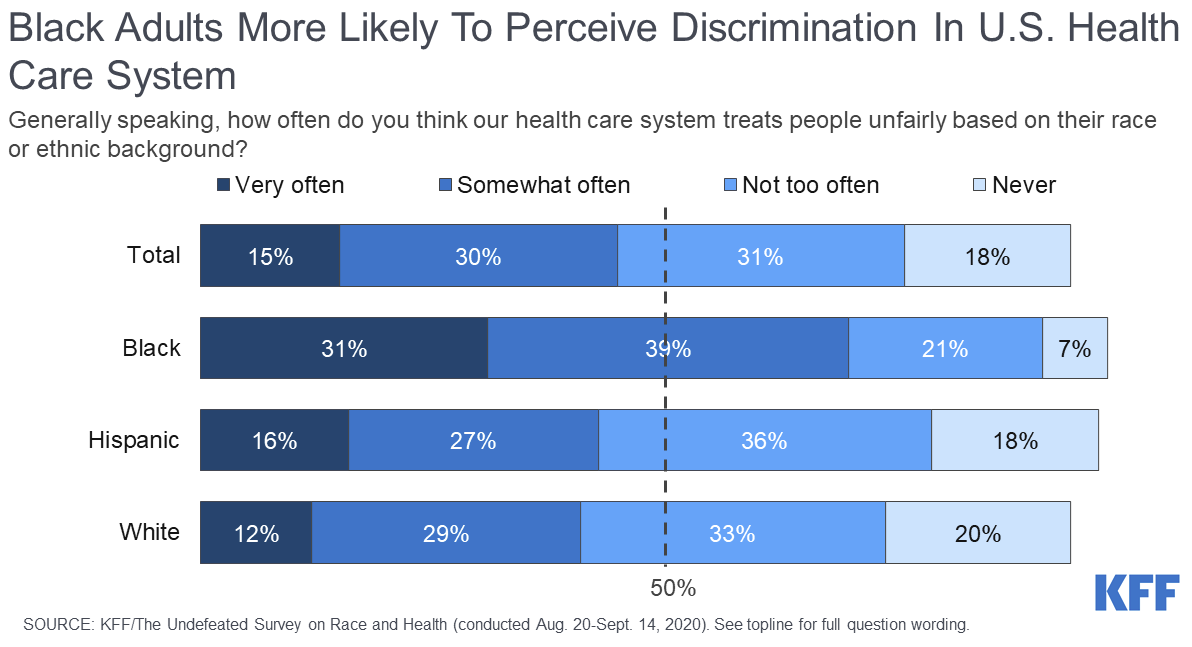
This podcast opens with a narration by a woman named Nikole Hannah-Jones. She begins by introducing the speaker's family and Nikole focuses on her special relationship with her Uncle Ed. In a heartbreaking end, her uncle dies because of the lack of access to equitable health care. That was current, but then the podcast goes back in time to 1866, the beginning of Reconstruction, following the Civil War. The time period is typically viewed as a failure due to the blatant systemic racism of Jim Crow Laws and the KKK. Then the narrators jump ahead in time again to the 1940s, then the 60s and 80s. 

image


The narrators do a great job of telling this story by seamlessly weaving in historical events and the social, economic, and political conditions for Black Americans across time. Skipping through the timeline is actually very powerful. Normally history is taught chronologically and you go year to year and that makes it harder to really see the change (or lack of change) over time. By skipping ahead the message is clear, there hasn't been much progress when it comes to healthcare. In the preamble of the U.S. Consitution, it says that the government will "promote the general welfare" but through this podcast, it is clear that when it comes to all types of welfare the government isn't protecting it for all. I enjoyed the layer that this podcast had and how it included the voices of the people it told the story of in time and place.

Podcasts as a learning tool for students is actually a conversation that my department began having at the end of this year. We even thought of using podcasts to replace our summer reading. We didn't end up creating a summer reading assignment but we did throw around the idea of using it in our first unit around a common theme we will explore. I think podcasts could be a great way to engage students, although I'm not entirely sure how I could structure it with my middle school students. The structure of it, how it's told like a story and makes connections through real stories is engaging. When the podcast was over I thought about how it could fit into my high school classes and I immediately thought of the themes of social studies standards and how so many are present in this podcast, and I thought about the discussions that could come from it. For example, in this podcast the narrator says, "Health care is a human right, and that any program that expands access to health care is the duty of a free and democratic society." This could become a discussion around what is a human right, or what is the responsibility of the government to protect citizens? I think a podcast could be more than a supplemental tool. I think it could start some deep conversations that are relevant, and meaningful to my students.

Tuesday, June 27, 2023

Disney

 I am definitely a Disney kid, and even today I love Disney. I grew up watching the movies and playing Disney trivia games. My family was not able to take trips to Disney because it would be costly. I have been to Disney two times, and since my last time going there, I have wanted to go back. The size, scope, and attention to detail of their parks have always amazed me. Even as an adult, I enjoy Disney. Like one of the students reflected on page 178, it is hard to look back and look within to see how certain stereotypes make up think or not think in certain ways. Walt Disney is all about imagination, even calling their creative team "Imagineers." But how much imagination do their animations leave room for? or Does Disney create the picture for us?

Christensen's chapter made me think of Harro's Cycle of Socialization (2004) that I read in the MLED program. The Cycle starts with the fact that we are born into a world where these systems and beliefs already exist. The first socialization takes place through our interactions with those who raise us (close friends and family). Then institutions and culture socialize us and reinforce these beliefs until we are faced with a choice; to stick to the status quo or to question it. Christensen is questioning it while some students, such as Justine were a bit more bothered by it. She was doing the critical work but it was uncomfortable (p. 177-178).

Christensen challenges my views of Disney. It is not a challenge that makes me angry about how I grew up or the fact that I still love Disney movies and theme parks but it brings awareness that I think I do need to have. I can love something, but still critique it. Of course, there are some major issues that do not align with who I am or what I believe but I am not angry that Christensen is pointing these issues out. Will I stop watching Disney+...no, but I can use my critical lens to start more conversations about the critical questions that should be asked of the company.


Monday, June 26, 2023

"Digital Native" / "Digital Immigrant"

While Marc Prensky uses age to separate "digital natives" and "digital immigrants", Danah Boyd challenges this simple grouping and discusses the overall need for proficiency in media literacy. In chapter 7, Boyd discusses Prensky's work and one of the major beliefs seems to be that younger generations think about and understand information differently compared to older generations (p.179). While I agree with this I do not agree with Prensky's assumption that technology usage is natural to them. On page 177 Boyd writes, "Teens may make their own media or share content online, but this does not mean that they inherently have the knowledge or perspective to critically examine what they consume...teens will not become critical contributors to this ecosystem simply because they were born in an age when these technologies were pervasive." This stood out to me because based on peer-to-peer conversations I hear in the halls it is easy to see that they are consuming information on Instagram, TikTok and/or YouTube and that single source or that single creator shapes what they know about the topic. It is more important than ever to teach students the skills to take the extra step and look at the source/author or simply read multiple articles on the subject to get a larger picture of what is happening.

Boyd discusses how a major problem with Prensky's position on age as a determining factor in digital literacy is that is implies that all youth are literate in technology (p.179). Boyd continues her discussion by including an important factor; privilege. I think the pandemic opened our eyes to how inequitable access to technology really is even in 2020. I remember the number of students who did not have WI-FI at home and stories on the news of families driving to a fast food restaurant and sitting in the parking lot during school hours just to have access to the internet. Therefore, assuming that all youth are technologically literate comes from a place of privilege. I can draw a parallel to the studies of children who are read to at home before entering school or have access to books in the home puts them ahead of their peers who do not have access to books for many reasons including socioeconomic factors. Therefore, if children do not have access to technology or have limited access then it is not as much a part of their lives. This is one reason why I do not agree with the terminology Prensky uses. I think that how those terms are used today carries negative connotations that somehow one is better than the other.

It seems as though Prensky groups all youth under the "digital native" umbrella while older generations are "digital immigrants". Overall, I lean more towards Boyd's stance on the topic rather than Prensky mainly due to his assumption based on age rather than the inclusion of other factors discussed above.

I think that this image represents many of the skills that should be considered when evaluating media sources.


Introduction Entry 6/26


Hello all! My name is Samantha and I've been teaching for four years. So far, my summer has been great because I spent the last week hiking in Maine with my sister. We climbed multiple mountains and rockfaces and walked along the stunning coastlines. This summer my plan is to get out on the water more and read some of the many books I have on my "To Read" list.

Here is a picture from my trip. :)


Pecha Kucha

       While I always knew I wanted to become a teacher; my teaching story did not begin until I got into my first classroom in 2019. I was ...